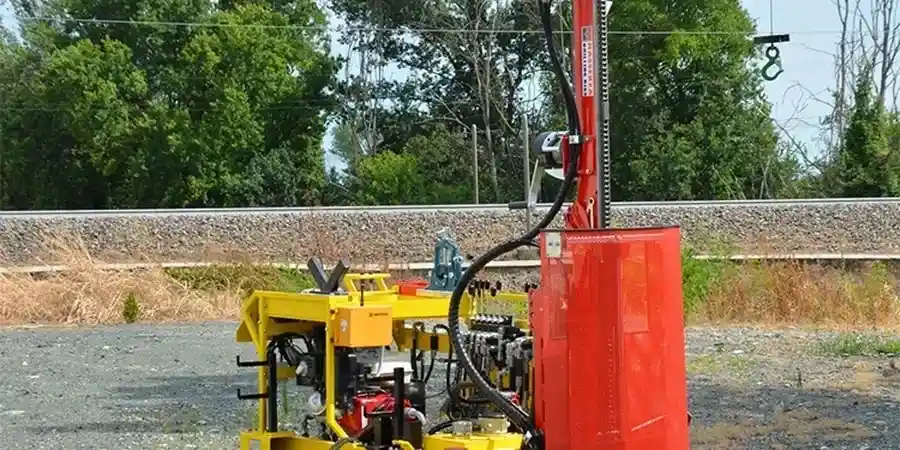
For any geotechnical investigation in Birkenhead, we follow BS 5930 and Eurocode 7 to deliver reliable SPT (Standard Penetration Test) results. The local geology, dominated by glacial till overlying Triassic sandstones, creates a variable soil profile that demands careful testing. Our team performs the standard penetration test at regular intervals to capture N-values that directly inform bearing capacity and settlement calculations. When the till contains cobbles or boulders, we supplement the SPT with calicatas exploratorias to verify stratification and identify obstructions before deeper testing.
The standard penetration test remains the most widely accepted field method for estimating relative density and strength in granular soils across the Wirral.
Process overview
A common mistake contractors make in Birkenhead is relying on a single SPT blow count without checking for disturbance or partial penetration in dense till. The standard penetration test must be executed with a correct 63.5 kg hammer, a 760 mm drop, and precise rod energy correction to avoid underestimating N-values. We measure energy transfer ratio on every borehole and apply the necessary adjustments. For gravelly layers, we cross-check results with ensayo CPT to obtain continuous profiles without the limitations of SPT refusal. In low-plasticity clays, we also run limites de Atterberg on recovered samples to classify the soil and assess its sensitivity to moisture changes.
Technical reference image — Birkenhead
Local context
Birkenhead sits on the eastern side of the Wirral Peninsula, with approximately 88,000 residents and an average elevation of just 15 m above sea level. The underlying glacial till can contain lenses of soft clay or loose sand that are not visible from surface inspections. Without a properly executed SPT (Standard Penetration Test), these weak zones may go undetected, leading to differential settlement or bearing failure. Our testing program targets these critical horizons to identify risk before foundation design is finalised.
We drill boreholes using rotary or percussive methods to the required depth and perform SPT at 1.0 m intervals or at every change of stratum.
02
Energy measurement and correction
We install an instrumented rod to measure actual energy transfer and apply ERi corrections to raw N-values, making them comparable across different rigs.
03
Soil sampling and classification
Disturbed samples from the split spoon are logged on site and sent to our UKAS-accredited laboratory for moisture content, particle size distribution and Atterberg limits.
04
Interpretation and design parameters
We translate corrected N-values into relative density, friction angles, undrained shear strength and modulus of subgrade reaction using recognised correlations.
Relevant standards
BS 5930:2015, BS EN 1997-2:2007 (Eurocode 7 – Ground Investigation and Testing), BS EN ISO 22476-3
Common questions
What is the difference between raw N-value and corrected N-value in an SPT?
The raw N-value is the blow count recorded in the field for the last 300 mm of penetration. The corrected N-value (N60 or N1,60) accounts for hammer energy efficiency, rod length, borehole diameter and overburden pressure. For design in Birkenhead we always use corrected values to match Eurocode 7 requirements.
What is the typical cost of an SPT in Birkenhead?
The typical cost for an SPT (Standard Penetration Test) in Birkenhead ranges between £380 and £630 per test point, including drilling, execution and on-site logging. The final price depends on depth, access conditions and number of tests.
Can the SPT be used in the glacial till of Birkenhead?
Yes, the SPT works well in glacial till, but cobbles and boulders can cause premature refusal or damage the split spoon. When this happens we combine the test with calicatas exploratorias to expose the coarse fraction and continue the investigation with CPT in finer zones.