Together, we solve the challenges of tomorrow.
READ MORE →Ground improvement in Birkenhead represents a critical branch of geotechnical engineering focused on modifying the physical properties of soil and rock to support safe, durable construction. The town's industrial legacy, combined with its position on the Wirral Peninsula, means that developers frequently encounter challenging ground conditions ranging from compressible alluvial deposits to variable man-made fills. A well-designed improvement strategy can transform a site deemed unsuitable for development into stable, buildable land, mitigating risks such as differential settlement, slope instability, and inadequate bearing capacity. For Birkenhead's ongoing regeneration, particularly around docklands and former industrial zones, these techniques are not merely optional but fundamental to project viability.
The local geology of Birkenhead is dominated by superficial deposits overlying Triassic sandstones of the Sherwood Sandstone Group. Much of the low-lying land near the River Mersey and its tributaries is underlain by thick sequences of soft alluvium, including silts, clays, and peat, often with a high water table. Glacial till, a heterogeneous mix of clay, sand, and boulders, is also widespread and can present unpredictable conditions. These soils are prone to consolidation under load, and their variability demands a tailored approach. Understanding this geological context is the first step in selecting an appropriate improvement method, whether for a small residential extension or a large commercial development in the town centre.
In the United Kingdom, ground improvement works must comply with a robust suite of standards and regulations. The execution of ground treatment is primarily guided by BS EN 12715 (Execution of special geotechnical work – Grouting) and BS EN 14731 (Execution of special geotechnical works – Ground treatment by deep vibration), with design methodologies often referencing BS 8004 (Code of practice for foundations) and BS EN 1997 (Eurocode 7: Geotechnical design). Crucially, any investigation and design must adhere to the requirements of the Construction (Design and Management) Regulations 2015, placing duties on clients, designers, and contractors to manage health and safety risks. The use of CE-marked or UKCA-marked materials in techniques like grouting also falls under the Construction Products Regulation, ensuring quality and performance.
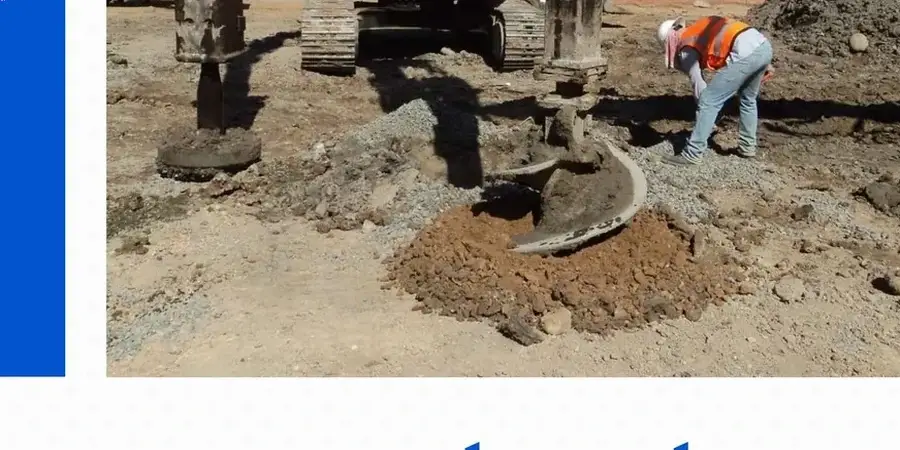
The types of projects in Birkenhead that necessitate ground improvement are diverse. The transformation of derelict docklands into mixed-use residential and commercial spaces almost always requires addressing loose hydraulic fills and soft estuarine clays. Here, a technique like stone column design can offer essential load-bearing support and accelerate drainage, reducing settlement times. Similarly, the construction of new infrastructure, such as road widening or flood defence works, often encounters buried obstructions or variable ground where permeation or compaction grouting design is employed to create a homogeneous, impermeable mass or to stabilise the soil matrix. Even smaller-scale developments, like the extension of a Victorian-era property on a sloping site, might require ground improvement to manage the risk of landslip in the underlying glacial till.
Ground improvement is the process of enhancing soil properties to meet specific engineering requirements, such as increased strength or reduced permeability. In Birkenhead, it becomes necessary when the natural ground, often comprising soft alluvium, peat, or loose made ground near the Mersey, cannot support the proposed structure's loads without unacceptable settlement or instability.
The selection of a technique depends entirely on a detailed ground investigation report that characterises the soil profile, groundwater conditions, and the structural loads. For example, soft, cohesive soils might be treated with stone columns, while granular soils with high permeability could be candidates for grouting. A geotechnical engineer will match the method to the specific failure mechanism being addressed.
Key standards include BS EN 1997 (Eurocode 7) for geotechnical design, which provides the overarching framework. Execution is covered by BS EN 12715 for grouting and BS EN 14731 for deep vibration techniques. BS 8004 also provides guidance on foundations, and all projects must comply with the health and safety requirements of the CDM Regulations 2015.
While ground improvement can dramatically reduce both total and differential settlement, it may not eliminate it entirely, especially on very deep, highly compressible soils. Techniques like stone columns create a composite ground mass with improved stiffness and drainage paths, accelerating consolidation and reducing settlement to within tolerable limits defined by the structural engineer.