Birkenhead sits on a mix of glacial till and alluvial deposits from the River Mersey, with groundwater levels often just 2–3 metres below surface. That combination makes rigid pavement design here a matter of balancing slab thickness against long-term moisture changes. We start every project with a detailed ground model, using shallow boreholes and In-Situ to map soil variability. Complementing this with an ensayo CBR gives us the soaked California Bearing Ratio needed for pavement thickness calculations, while clasificación de suelos helps classify the subgrade into AASHTO groups. The result is a pavement that resists cracking and pumping even under heavy HGV traffic on the A41 corridor.
The k-value of Birkenhead's glacial till typically ranges from 30 to 80 MN/m³, making it a consistent but moisture-sensitive subgrade for rigid pavements.
Process overview
Our approach to rigid pavement design in Birkenhead relies on a multi-stage site investigation that targets the subgrade, sub-base, and drainage conditions. We deploy dynamic cone penetrometers and plate load tests to measure the modulus of subgrade reaction (k-value) at multiple depths. Before placing concrete, we run ensayos Proctor to establish the optimum moisture and maximum dry density for compaction control, and límites de Atterberg to check for shrink–swell potential in clay-rich tills. The design itself follows BS EN 1997-1 and the UK Design Manual for Roads and Bridges. We calculate joint spacing, dowel bar sizing, and concrete strength class (usually C32/40) based on traffic class and subgrade support. Every report includes a fatigue analysis for the expected number of standard axle loads over the 40-year design life.
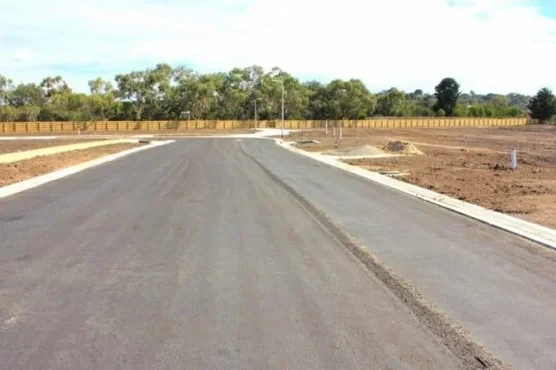
Technical reference image — Birkenhead
Local context
The main risk for rigid pavements in Birkenhead is differential settlement caused by variable glacial till thickness and localised peat lenses. Heavy winter rainfall saturates the subgrade, reducing the k-value and increasing the chance of pumping under joints. We mitigate this by specifying a 150–200 mm cement-bound granular sub-base and installing edge drains tied to the existing sewer network. Where groundwater is within 1 m of formation level, we apply a capillary break layer of 20 mm clean stone. Our rigid pavement design also accounts for frost heave potential – the area sees around 40 frost days per year – so we set the slab depth below the frost line (typically 450 mm) to prevent freeze-thaw damage to joints.
Boreholes, trial pits, and In-Situ (DCP, plate load) to classify subgrade soil, measure k-value, and identify soft spots or peat layers. Includes CBR testing, Atterberg limits, and frost susceptibility.
02
Pavement Structural Design & Analysis
Full rigid pavement thickness design per DMRB CD 226, including joint layout, dowel bar scheduling, concrete mix specification, and fatigue life assessment for up to 80 MSA (million standard axles).
03
Construction Quality Control
Compaction testing (nuclear gauge, sand cone), concrete cube crushing, joint saw-cut timing, and surface regularity surveys to ensure the finished pavement meets design assumptions.
Relevant standards
BS EN 1997-1:2004 (Eurocode 7 – Geotechnical design), Design Manual for Roads and Bridges (DMRB) CD 226, BS 8500-1:2015 (Concrete specification for pavements), TRL Report 87 (Pavement design for roads in the UK)
Common questions
How much does rigid pavement design cost in Birkenhead?
A typical ground investigation and design package for a rigid pavement in Birkenhead ranges from £1,380 to £5,680, depending on site size, number of boreholes, and traffic class. This includes site work, laboratory testing, and a full design report with drawings.
What is the typical subgrade k-value for Birkenhead soils?
For the glacial till found across most of Birkenhead, the modulus of subgrade reaction (k) ranges between 30 and 80 MN/m³. Where soft alluvial clays or peat are present near the docks, the value can drop below 15 MN/m³, requiring a thicker slab or a cement-treated sub-base.
Do I need a rigid or flexible pavement for a Birkenhead industrial access road?
Rigid pavement design is preferred for industrial access roads with frequent heavy axle loads, such as HGV turning areas and loading bays. The concrete slab distributes load over a wider area and resists rutting better than asphalt. We assess traffic volumes and subgrade support to recommend the most cost-effective option.