Eurocode 7 (EN 1997-1:2004) and the National Annex for the UK require site-specific ground models for seismic design. In Birkenhead, the underlying geology includes Triassic sandstones overlain by glacial till and river terrace deposits. These variable layers make shear wave velocity (VS30) a critical input for defining the ground type. MASW (Multichannel Analysis of Surface Waves) is the non-invasive method we use to obtain a continuous VS profile down to 30 m. The resulting VS30 value directly feeds into the site classification per ASCE 7 and NEHRP provisions. We regularly combine this with a georradar survey to map shallow stratigraphy, and with SPT borings for direct strength correlation across the Wirral peninsular.
A single MASW line in Birkenhead can map VS30 across a 50 m site, revealing stiffness changes that five boreholes might miss.
Process overview
A common observation in Birkenhead is that the glacial till layer varies in thickness from 2 m to over 8 m within a single site. This lateral variability makes a single borehole insufficient. MASW provides a 2D velocity profile along a linear array, capturing changes in stiffness that a point test would miss. The survey uses a 24-channel seismograph with 4.5 Hz geophones spaced at 2 m intervals. We generate surface waves with a sledgehammer source and invert the dispersion curve using a fundamental-mode algorithm. The output includes a VS30 value and a layered velocity model. This data is essential for projects near the Mersey riverfront where soft alluvial deposits can amplify ground motion. We often pair MASW with microtremor HVSR to confirm the fundamental site period.
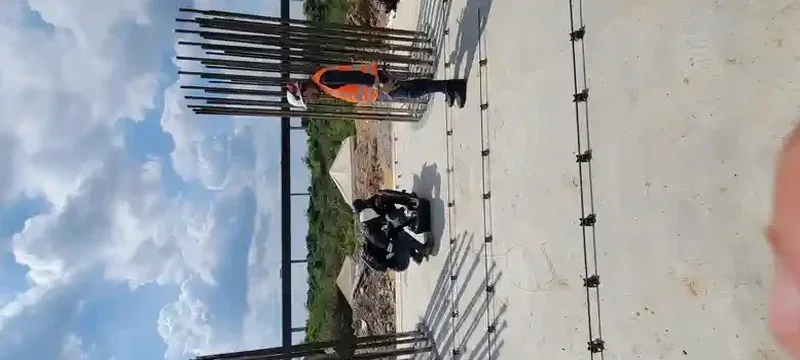
Technical reference image — Birkenhead
Local context
Birkenhead sits on the eastern bank of the Mersey Estuary. The water table is typically shallow, often within 2 m of the surface in low-lying areas near the docks. Saturated loose sands and soft clays are prone to liquefaction during seismic events. A low VS30 value (below 180 m/s) indicates Site Class E per NEHRP, which triggers special design requirements under Eurocode 7. If the VS30 is mischaracterised by even 20 m/s, the design spectrum shifts, potentially underestimating peak ground acceleration. That is why we run quality checks on every dispersion curve and validate against local borehole logs. Ignoring the MASW data in Birkenhead can lead to under-designed foundations in areas of deep till or overwaterfront fills.
Single 46 m array with a 24-geophone spread. Suitable for residential and small commercial plots. Provides one VS30 value and a 1D velocity profile. Includes field work, inversion, and a summary report with site classification per Eurocode 8.
02
2D MASW Tomography
Multiple parallel lines covering larger sites (up to 200 m x 100 m). Generates a contoured VS map showing lateral variations. Ideal for infrastructure projects, road cuttings, or sites with suspected paleochannels. Includes a full geotechnical interpretation and cross-sections.
Relevant standards
BS 1377/D4428M-14 (MASW standard), NEHRP Recommended Provisions (VS30 site class), Eurocode 8 – EN 1998-1:2004, BS 5930:2015 (site investigation code)
Common questions
How is a MASW survey carried out in Birkenhead?
We deploy a 46 m linear array of 24 geophones on the ground surface. A sledgehammer strikes a steel plate at one end, generating surface waves. The seismograph records the wavefield, and we invert the dispersion curve to obtain a shear wave velocity profile down to 30 m. The whole process takes about 3 hours per line, including setup.
What does the VS30 value tell me about my Birkenhead site?
VS30 is the average shear wave velocity in the top 30 m. It classifies the ground into Site Class A through F per NEHRP. A low VS30 (below 180 m/s) means soft soil that amplifies seismic shaking. A high VS30 (above 760 m/s) indicates rock or very dense till. This classification directly affects the seismic design spectrum you must use under Eurocode 8.
What is the typical cost range for a MASW survey in the Wirral area?
The price for a standard MASW survey in Birkenhead typically falls between £1,460 and £2,780. The exact cost depends on the number of lines, site access, and whether you require a full 2D tomography or a single-line 1D profile. We offer a fixed quote after a quick site visit.
Can MASW replace boreholes for site classification?
MASW provides a continuous velocity profile, but it does not give soil samples or direct strength data. We recommend using MASW alongside at least one borehole for calibration. The borehole provides the soil type and density, while MASW maps the stiffness across the whole site. Combined, they offer a much more reliable ground model than either alone.