Together, we solve the challenges of tomorrow.
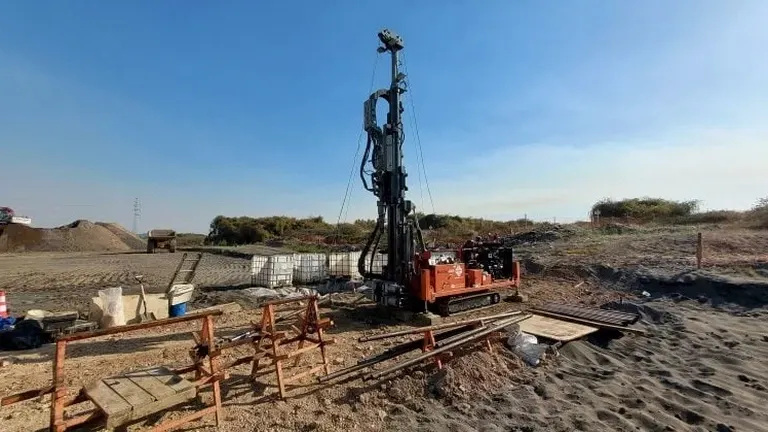
READ MORE →Ground investigation is the cornerstone of any successful construction or civil engineering project in Birkenhead. It encompasses a systematic programme of exploratory techniques designed to understand the physical, chemical, and mechanical properties of the soil and rock beneath a site. Without this critical data, developers, engineers, and architects are essentially designing blind, risking structural failure, costly delays, and unforeseen environmental liabilities. In a town with a rich industrial heritage and ambitious regeneration plans, a robust investigation is not just a best-practice recommendation; it is a fundamental prerequisite for safe and sustainable development.
Birkenhead's geological profile presents a unique set of challenges that make thorough investigation indispensable. The town sits on the eastern bank of the River Mersey, underlain by the Triassic Sherwood Sandstone Group, a significant aquifer. Crucially, this bedrock is frequently overlain by complex sequences of glacial till, made ground, and alluvial deposits. The legacy of Birkenhead's shipbuilding and dockland past means vast areas are covered by anthropogenic fill, containing rubble, industrial waste, and potentially contaminated materials. Understanding the depth, composition, and variability of these superficial deposits is critical for foundation design and contamination risk assessment.
All ground investigation work in Birkenhead must strictly adhere to the comprehensive framework of UK national standards. The primary standard governing the technical execution of intrusive investigations is BS 5930:2015+A1:2020, the Code of Practice for Ground Investigations. This is complemented by Eurocode 7 (BS EN 1997), which covers geotechnical design and requires investigations to be planned and executed to derive characteristic values for soil parameters. Furthermore, for projects involving potential contamination, the procedures outlined in BS 10175:2011+A2:2017 for the investigation of potentially contaminated sites are legally and contractually binding, ensuring a consistent and defensible approach to risk management.
The scope of projects demanding a detailed ground investigation in Birkenhead is exceptionally broad. From the transformative Wirral Waters regeneration scheme, with its high-rise residential and commercial structures, to smaller-scale housing developments and essential infrastructure upgrades, every project has a unique geotechnical risk profile. Investigations are vital for designing appropriate foundations, assessing ground gas risks such as radon and methane from old landfills, planning dewatering strategies for deep excavations, and evaluating the stability of existing slopes and dock walls. The selection of the right in-situ testing methods is crucial; for instance, a CPT (Cone Penetration Test) can offer near-continuous soil profiling and is particularly effective in soft alluvial clays and sands, while a SPT (Standard Penetration Test) remains the industry staple for correlating soil strength in a wide range of materials, especially within boreholes in made ground.
A ground investigation is essential to identify the specific soil and rock conditions on your site, which in Birkenhead often include variable made ground and soft alluvial deposits. It provides the data required for safe foundation design, assesses risks like ground gas and contamination, and ensures compliance with building regulations and Eurocode 7, preventing costly unforeseen problems during construction.
A typical UK ground investigation follows a phased approach. It begins with a desk study to gather historical and geological data, followed by a site reconnaissance. The main intrusive investigation then uses techniques like boreholes and in-situ tests to collect samples and data. Finally, laboratory testing is conducted, and a factual and interpretive report is produced with geotechnical and environmental recommendations.
The primary standard is BS 5930:2015+A1:2020, which provides the code of practice for site investigations. Geotechnical design is governed by Eurocode 7 (BS EN 1997), and the investigation of contaminated land follows BS 10175:2011+A2:2017. These standards ensure that all investigation work is performed to a consistent, legally defensible, and technically robust level.
The duration of a ground investigation varies significantly depending on the project scale, site accessibility, and the investigation's scope. A small residential site investigation might take a few days of fieldwork, followed by 3-4 weeks for laboratory testing and reporting. A major commercial development in Birkenhead could require several weeks of intrusive work and months for full data analysis and interpretive reporting.